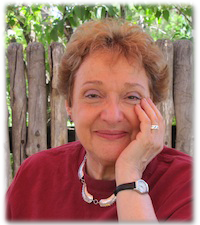
July 29, 2024
FAME Conference Keynote Talk, July 20, 2024
CIVILITY, COOPERATION, AND COMMUNITY – Sanna Longden
Good morning, friends. It was such a pleasure to dance with you last evening—it was truly Tuneful, Beatful, and Artful, and there was definitely Civility, Cooperation, and Community—these are the watchwords of our faith. I also believe in this one: No Child Left on His or Her Behind.
During many years—many, many, many, many years—I’ve been an international dance group leader, a performing folk dancer, a world dance educator, a teacher of cultural dances, and an artist-in-residence—deeply and joyously immersed in this activity and this community.
However, it was not the career I planned to pursue—who knew this could be a career? There are a number of important steps—I think of them as real steps–that I had to take in order to arrive here today, at this microphone on this platform of this 5th FAME Biennial Conference.
Dancing was never an activity in my birth family. I think the first big step toward my dance education career was when, in my senior year in high school, we were given a combined assignment from both our English and music classes to listen to a piece of classical music and write a story about it. I chose Rachmaninoff’s 2ndPiano Concerto and, out of nowhere, instead of writing a story—and I enjoyed writing—I created a choreography for it: my characters were dancing. I was as surprised as anyone. Where did that come from?
The second significant step toward this moment today happened in my senior year of college. My boyfriend and I were engaged, as our society required then for female college students, with plans for a small family wedding a few months after graduation,
So, leading to the significant second step that brought me here today, I was sitting by myself in the University of Michigan Union when I heard entrancing music coming from a room nearby. I was drawn into that room as though I were hypnotized and saw about 20 students moving together in a circle.
“Come on in,” someone beckoned me into the group. And, still hypnotized, I joined hands on either side and found myself mysteriously able to follow the rhythmic pattern of what turned out to be an Eastern European dance. Those were literally the very first actual steps into what would become my next 50 years of attending and leading multicultural recreational dance groups.
After college graduation, I did what was expected: got married, worked as a secretary and editor, and had a baby while my husband got through graduate school.
However, in spite of the fact that he couldn’t and wouldn’t dance, folk dancing was so vital to me that I continued to attend local dance groups on my own. This led to the next really important life step: When we moved to Providence, Rhode Island, I was invited to join the Brown University performing ensemble. Now I was a performing dancer—even performed at the New York World’s Fair in 1964! I’m sure many of you know the thrill of being up on a stage sharing your talents with an applauding audience. That can certainly seal one’s commitment to an activity.
My husband’s next career move led us to the Chicago area, where I still live today. Although by that time, I had my own editing business, was dancing with the local performing group, and attending several weekly recreational folk-dance groups—oh yeah, we had a second child, also—
this is when I took the two most important steps forward that brought me here with you today: One was that, for the first time, I became one of the instructors. I felt there was a need for a beginners’ international dance group to prepare people for the more advanced weekly sessions, and somehow I decided that it was my job to start that group: I took the enormous step of becoming a movement teacher, based only on 10 years of watching other people teach.
About this time, I was also going through a personal choreography that was to very much enhance the steps I was taking on life’s dance floor. Two new men joined the performing ensemble—one named Mark and one named Mars. They were similar in age, looks, and build, and I had trouble telling them apart. About that time, my husband and I separated, a year later we divorced, and four years later I was married to the man named Mars. (Once, after hearing me tell this story, he exclaimed, “Wait! No, I’m Mark!”) Now my careers as movement teacher, community dance caller, and folk dance group leader were much intensified: I had someone who not only supported but partnered me, who actually enjoyed and was good at these activities, plus he played the accordion.
But the very biggest step, the one that led to my many wonderful years connected with music education and music educators happened when two women in my beginners’ group came to talk with me one evening in 1980. “You teach the way we like to learn,” they said. “Would you come give a dance workshop at our Orff chapter meeting?”
Well, the rest is definitely history! Those two wonderful women were Jacobeth Postl and Lillian Yaross—who knows those names? Jake and Lill were early and important American Orff Schulwerk educators. Their chapter workshop led me to the AOSA Conference in Boston the next year, and to 40 years of wonderful experiences with Orff and Kodaly chapters, music education conferences, and summer courses, including Orff chapters in Canada and Taiwan; a summer course in Nanjing, China; and even some classes at the Hartt School of Music. In fact, connecting with my dear Connecticut friends, John and Lillie Feierabend was very much a part of this journey.
Being part of the music ed community also led me to receiving one of my favorite possessions. I began getting the “Pass It On” magazine from the Children’s Music Network, and in it one day, I saw a singing round identified with what I knew was the wrong culture; also, it wouldn’t have fit the guidelines of Diversity, Equity, and Inclusion. So I sent a letter with a tactful correction and some helpful information. I shortly received a postcard from the music editor thanking me, saying he would follow up on my suggestions, and signed his name, Pete Seeger. That card has been framed on my wall—here it is.
And, of course, all those steps that have led me to years of dancing with music teachers and other educators, moved me on to the even more memorable experiences in classrooms with kindergartners through college students. I wish I could offer you words of wisdom, but I have seen changes and challenges in the education world that make much of my experience somewhat obsolete: The school where I was told there were to be no consequences for bad behavior; the music teacher who was blamed by the mother of the boy who spit on her; children who have never learned civility, cooperation, and community because they have only been to school on their home computers. I know I’m preaching to the choir here.
But I can share with you some of the tricks of my trade. Here is Wesley—he has been with me in every elementary school music room, being the relatable buffer to start our sessions. Sometimes he filled in as a partner. His wardrobe grew over the years as amused school staff or parents would give him gifts, like these. Every day I was in a school, Wesley would wear a different outfit. I remember one boy coming into the classroom the next day and greeting Wesley in surprise: “Hey, he’s wearing something different from yesterday.” I said to him, “Aren’t you?” and got a stunned and suspicious look.
More than once, when I would come back to a school a few years later, children who had been with Wesley as, for instance, second-graders, would be so happy to see him again in the fourth grade; they’d shout, “Wesley!” and remembering our time together with pleasure, be ready to dance with me again.
Other tools of my trade are these Smiles and this Ear…. They often work better than my teacher voice. And the lei—as I’m handing them out, I must chant, “Color doesn’t matter.” And the sticks—the children sit in a circle with two sticks in front of them, and I ask each of them to tell the class what they would not like the person next to them to do with their sticks—I get answers like “don’t hit me on the head,” and “don’t put them in my ears.”
And, of course, I use multicultural dances to celebrate ethnic holidays like Cinco de Mayo, Chinese New Year, Ramadan, Christmas and Hanukah and, of course, Ground Hog’s Day.
Also, my connection with music educators led me to the big step of creating my own products to support my teacher friends in their classrooms [show products, books, etc.].
And I have wonderful memories, like that of a third-grade classroom in central Illinois, not far from here. Mars occasionally went to schools with me, bringing along his accordion, as he did this time. He explained a bit about the instrument to the 3rd graders, played a melody, and asked, “Have any of you ever seen the inside of an accordion?” because they were interested in how it worked, expecting, as usual, that no one ever had seen the reeds that help an accordion make music.
But a small voice came from the back of the group on the floor, wavering a bit with a foreign accent: “Yes, I haf. My grandfather in Russia, he haf one.” The two teachers in the room gasped, clasped hands on their chests, got tears in their eyes. They told us later that this boy, Dmitri, had come to their school some months before when his family emigrated from Russia and his father got a job in a nearby factory, and that Dmitri had been completely mute, had not yet said one word. The accordion opened him up and, as we heard later, helped him to communicate and assimilate into the classroom and playground.
Another validating experience happened in a 5th grade music room that had children from a number of different countries. I enjoy situations like this as I am greatly interested in the music and dance of many cultures. As they were settling on the floor in front of me, I checked their name tags to see if their last names would tell me what parts of the world they were from. (I always ask that students wear name tags—they like to be recognized, and it helps me with my so-called classroom management).
Thus I was able to start the lesson by asking, “Who speaks Spanish?” Lots of hands went up. “Who speaks Arabic?” A few hands went up. “Who speaks Urdu?” Two hands went up. “Who speaks Yoruba?” One hand went up. “Who speaks English?” All hands went up with a lot of giggling. Then I said, “Here’s a language we can all speak,” and gestured to them [show sign language gestures, etc.].
Then we danced, with some incivility and uncooperation, but ended up with a lot of community. When the class time was about ended, they formed their usual line at the door. I went over to them and signed, [“Hi, how are you?”] and every one of them went, [“Awesome!”] It was one of my best reviews.
Sadly, Mars passed away unexpectedly 10 years ago, leaving me stunned and on my own for a few years, until I was incredibly lucky to meet at a dance festival in northern Wisconsin another wonderful supportive man, Clint Seely.
So that steady stream of my career steps has led to my teaching children all over the United States, sharing dances with teachers from Connecticut to California to Calgary to Chicago to China, leading an international dance group for 40 years, performing on many stages including in Macedonia and Hungary, teaching dancing on cruises to Alaska, on the Danube River, and the rivers of Russia. Those steps have also led to my starting a group to support people who teach dancing in community and schools, the Pourparler, which has been meeting annually since 1997 all over the U.S., this year the last weekend in September in Provo, Utah. There is still room for anyone who would like to join us.
And all those steps have led to what is probably one of the last chapters of my fabled career: I have a regular class at the senior community that requires instead of speeding up the pattern to keep young people’s attention, I slow down the pattern to keep old people’s balance.
And all those steps have led me straight to you all here at FAME today—I am so grateful and appreciative. Peace and good health to you all, plus happy dancing with civility, cooperation, and community.
November 11, 2020
Hello, friends.
Life has moved on since my last blog post. I am still teaching, mostly to educators, although my last few teacher gigs had to be canceled because of the pandemic.
Now I am teaching weekly on camera in the congregate community in which I live, as well as in person to socially-distanced masked people. I know most of you are teaching virtually, and I think you will find a lot of useful, enjoyable, and educational materials in my series.
There are many dances on my DVDs that are already done solo within groups–for example, “Yan Petit,” “Barnereinlender,” “Highlife,” and “Agadu.” Many others can be temporarily adapted for one person to do alone at home, or for many spread out in a big gym or playground.
If I can help you to keep the kids, families, adults, and yourself happily moving, please contact me, and please stay safe, sane, and healthy.
June 5, 2018
One of the reasons why I was first attracted to international dancing, and have so enjoyed teaching, performing, and participating in this field, besides that I love the world’s music, is that I am interested in the cultures and languages of our planet’s peoples.
So I was excited when invited a few months ago to be the artist-in-residence in the music classes for two elementary schools in a school district that is known to have the most languages spoken in our area.
The first day (of the two I got with each class), I looked at the variety and array of faces sitting on the floor in front of me, introduced myself and asked their names; this gave me a clue to their cultures. Then “Who speaks Arabic?” As hands went up, the Syrian and Iraqi students smiled with pleasure that I, the guest teacher, knew about their language.
Then I asked, “Who speaks Tagalog?” And a couple of Filipino boys waved at me. “Who speaks Urdu?” and several Pakistani girls, one wearing the hijab, put hands up. “Anyone speak Albanian?” Two girls, looking at each other in astonishment, reached high. “How about Mandarin?” A couple of smiling faces nodded at me. “Spanish?” Many hands went up.
I remembered to ask, “Whose language did I miss?” And one after another I would hear “Gujarati,” “Punjabi,” “Hindi,” “Yoruba,” “Cantonese,” “Assyrian,” even Russian and Hebrew from a few third-generation children.
And, finally, “Who speaks English?” There was lots of giggling as one, sometimes two, hands apiece were waved high in the air from every child.
Now all the faces were looking at me as I gathered their attention with, “Here’s a language we can all speak together—American Sign Language,” and signed to them, “Hi, how are you?” Then we practiced how they could show me “fine,” “so-so,” “not good,” and—both palms pushing toward the ceiling—“awesome!” All with appropriate facial expressions.
After a moment to decide how they were feeling at that moment, I signed again, “Hi, how are you?” There was a nice variety of signed responses.
I managed to get them through four or five ethnic music games and communal folk dances before it was time to line up at the door. I knew it all went well in each class that week when, as they were just about to leave, I signed once more, “Hi, how are you?” And every student gave me a big smile and showed me “Awesome!”
April 4, 2018
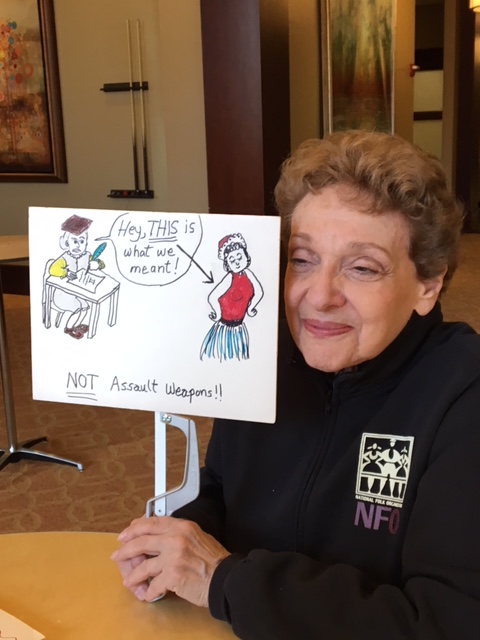
Happy New Year 2017
Dear Friends,
Here it is, the end of January 2017, and there’s a lot I could be writing. However, I just want to offer these thoughts:
If you are reading this now, then you must be an educator–someone connected to music and/or dance and/or cultures, and surely involved in communal types of activities with schools, children, families, and community organizations.
Please remember and believe that in spite of or because of whatever happens in our society, you are doing vital and desperately needed work. I appreciate and admire you, and am here to help you continue doing it.
Here are some thoughts that I didn’t write, but also appreciate and admire:
— Look for John Pavlovitz’s “Let the Record Show”:
Let the Record Show
— Two signs from the January 21 marches:
“We Shall Overcomb” and “We’ve Seen Better Cabinets at IKEA”
— (from Bettina Gruber’s Facebook page):
“IF YOU STUMBLE, MAKE IT PART OF THE DANCE”
I wish for you a year of health, enjoyment, and love.
Sanna
Hello, Friends, Welcome to Sanna’s New Website!
As many of you know, my life changed shockingly and devastatingly when I suddenly and unexpectedly lost Mars, my dear husband and partner (in dance, business, and life) on October 4, 2014.
What has gotten me through each long day is the loving and supportive community of family and friends that I am so lucky to have around me. Two of them are Chris and Iris Derfler, whom I would like to introduce here as my new partners in FolkStyle Productions (FSP), the company Mars and I created in 1990 to develop and sell CDs and DVDs to support my world dance workshops for teachers and students. (In the early ‘90s, we were producing audio cassettes and videotapes!)
Chris and Iris are not only close, longtime friends, but it is Chris who has been at schools and dance events with me to tape, and then produce, every FolkStyle video/DVD, except the first one. He has also continued to work with us, recording and taping most of the products, so it is natural and comfortable that he should carry on our business.
Also, during the past decade, Susan Bencomo assisted Mars in much of the day-to-day work of FolkStyle Productions, while I traveled to teach. I am grateful that Susan has been with us this past difficult year to continue her loyal and intelligent support, and still comes part-time to help us carry on.
“Us” is me and my wonderful son, Mick Hans, who lives in Chicago and to whom I am profoundly grateful for managing my life in so many ways. My wonderful daughter, Jessica Lawless, who lives in Oakland, California, has also given me important and sensitive long-distance support.
And many, many thanks to Dusan Vukosinovic of Virtus Group, who designed and managed our former FolkStyle Productions website and brought us into the e-commerce era. It has been a pleasure to work all these years with this smart, kind man who appreciates ethnic dance.
Now Mick and Susan are working with Chris and Iris to make a smooth transition for FSP, and helping me in other vital ways. We look forward to answering your questions, hearing your comments, and sending you our FolkStyle Productions CDs and DVDs.
 Sanna Longden * Dance and Music Education
Sanna,
It’s me, Robyn Gangi.
I have your cassette you made for me of “Ah, Robyn” and other assorted music, of which I sadly cannot remember since I have not used or owned a cassette player for decades….but still, I have it here with me as a reminder of that magical week at the Hartt School of Music where you taught.
And then the “Fiddler” production of mine that you taught a number of dances from the place where the story took place. My students’ lives were changed by that experience with you. My life was changed by that experience with you.
I used “Hineme Tove manyim”–boy did I mess up that spelling, forgive me [and any one else who is reading this]….haven’t touched that handout from you in years..but I taught the dance to a regional choral festival on Long Island several years ago. Yes, all 200+ of them surrounding the audience in concentric circles dancing and singing it. You would have been glad to see it.
Anyway, so much water under the bridge. Too much, actually. Please drop me a line when you can so we can reconnect and review our lives together since our last crossing of paths.
You are a beacon of light to so, so many people, Sanna. To so many.
robyn.gangi@gmail.com
Always,
“Ah” Robyn
LikeLike